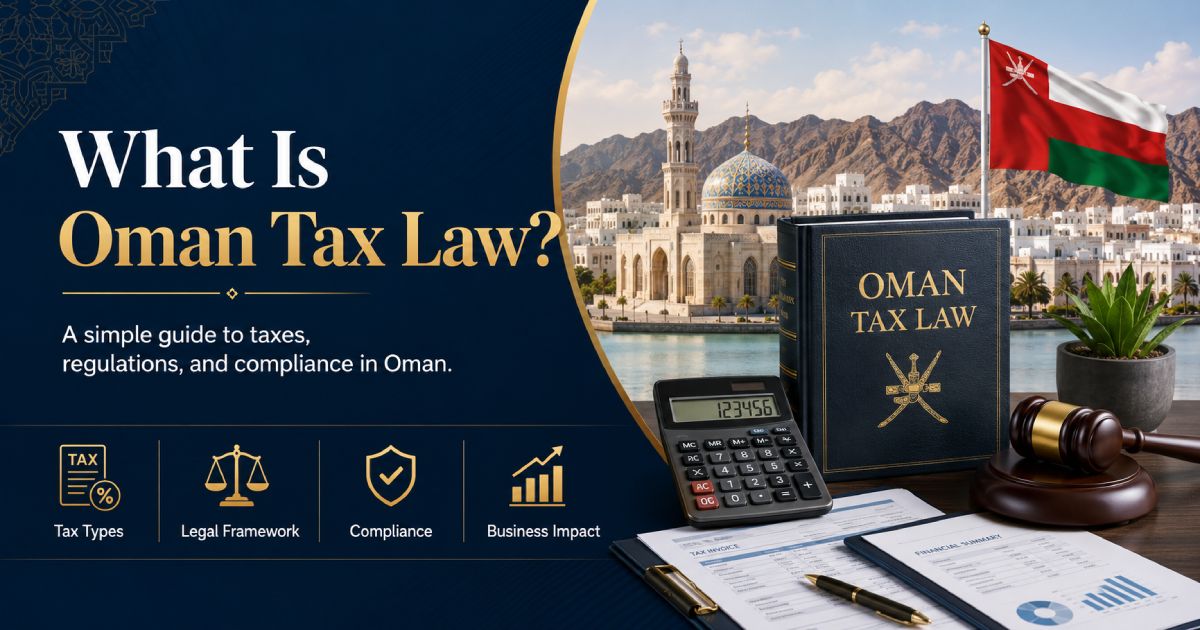
Oman tax law is the legal system that explains how businesses and individuals are taxed in the Sultanate of Oman. For anyone planning to open a company in Oman, understanding the basic tax rules is important before starting business activities.
Tax requirements can depend on your business activity, company structure, income, expenses, VAT status, documents, and the latest government regulations. This guide gives a simple overview for investors, entrepreneurs, and foreign business owners who want to understand the basic tax points before company formation in Oman.
Quick answer: what is Oman tax law?
Oman tax law covers the main tax rules for businesses and certain individuals in Oman. It includes corporate income tax, VAT, withholding tax, excise tax, tax registration, accounting records, tax filing requirements, and compliance rules managed by the Oman Tax Authority.
Corporate income tax in Oman
For most companies in Oman, corporate income tax applies on taxable profits. The exact calculation depends on the company’s income, allowable expenses, accounting records, tax status, and applicable law.
New business owners should keep proper accounts from the beginning because company records, invoices, expenses, contracts, and bank transactions may be required for tax filing and compliance.
VAT in Oman
Businesses may also need to register for Value Added Tax (VAT) if they meet the required conditions. VAT is charged on many goods and services, while some items may be exempt or zero-rated depending on the law.
If your business expects taxable sales, imports, services, or regular invoicing, it is important to check whether VAT registration applies before you start operations.
Withholding tax, excise tax, and other tax areas
Oman also has other tax areas such as withholding tax, excise tax on selected products, and filing requirements for registered businesses. Withholding tax may apply to certain payments made to foreign persons, depending on the type of payment and tax rules.
Excise tax can apply to selected products, and businesses dealing with these products may need additional compliance checks. Because each business is different, the right tax requirement should be checked based on the activity and transaction type.
Personal income tax from 2028
Oman has introduced a personal income tax law that is expected to apply from 2028 for high-income individuals above the official threshold. This shows that Oman’s tax system is developing as part of the country’s long-term economic plans.
Business owners, senior professionals, and high-income individuals should follow official updates and speak with qualified tax professionals before making personal or business tax decisions.
Why tax planning matters before company setup
For investors, entrepreneurs, and foreign business owners, tax planning is an important part of company formation in Oman. The exact tax requirements can depend on the business activity, company structure, income, expenses, VAT status, and latest government regulations.
- Choose the right business activity and license category
- Understand whether VAT registration may apply
- Plan accounting and bookkeeping from the start
- Keep proper invoices, receipts, contracts, and bank records
- Check whether withholding tax or excise tax may apply
- Work with qualified tax and accounting support for filing obligations
How GlobelZone can help
Before opening a company or starting operations, it is always better to check the latest tax rules. GlobelZone can guide you with Oman company setup, basic tax understanding, documentation, activity selection, and connecting you with the right support for updated business compliance requirements in Oman.
GlobelZone does not replace a licensed tax advisor, but our team can help you understand the business setup process and connect your company formation steps with proper accounting, documentation, and compliance planning.
FAQ: Oman tax law and business setup
What is Oman tax law?
Oman tax law explains how companies and certain individuals are taxed in Oman. It includes corporate income tax, VAT, withholding tax, excise tax, filing rules, and compliance obligations.
Do companies in Oman pay corporate tax?
Yes. Most companies in Oman are subject to corporate income tax on taxable profits, subject to the applicable tax rules and any available conditions or exemptions.
Does Oman have VAT?
Yes. Oman has VAT on many goods and services, while some supplies may be zero-rated or exempt depending on the VAT law.
What records should a company keep in Oman?
Companies should keep proper accounting records, invoices, receipts, contracts, expense documents, bank records, and tax filing documents.
Is personal income tax coming in Oman?
Oman has introduced a personal income tax law expected to apply from 2028 for high-income individuals above the official threshold.
Can GlobelZone help with tax and company setup planning?
Yes. GlobelZone can help with company setup guidance, documentation, activity selection, and connecting you with suitable compliance and tax support where needed.